Project Spotlight: Edmund Rice Centre Nairobi
The Empower Her project at Edmund Rice Centre Nairobi (ERCN) empowers 99 caregivers from Kibera, one of the most densely populated and under-served urban communities in Kenya. These caregivers are responsible for the full-time care of Children with Disabilities (CWDs), a role that significantly limits their access to formal employment and stable income opportunities. Beneficiaries range in age from 20 to 70 years, reflecting both young mothers and elderly caregivers who continue to shoulder caregiving and household responsibilities with minimal external support.
The project works with caregivers living in conditions of poverty and exclusion to deliver a package of entrepreneurship, financial literacy, and skills training alongside psychosocial and peer support. The aim is for caregivers to increase their income, build their confidence and reach greater stability, dignity and inclusion in the community. This holistic approach combines entrepreneurship, financial literacy, marketing and practical skills such as kiondo making, tailoring and urban farming and has improved both income generation and household resilience as exemplified in RoseMary’s story.
RoseMary is a 57-year-old mother of six and grandmother of three, and joined the Empower Her project at ERCN having two children with disabilities. Her main source of income has been knitting sweaters and urban farming. At one point, RoseMary faced a serious setback: the sweater-knitting machine she had relied on broke down. Disheartened, she considered giving up on her dream of earning income through knitting, and worried about her ability to support her dependents or contribute meaningfully to the group. However, RoseMary’s path took a turning point when she joined the ‘table banking’ training offered by the project. This model, a savings and credit system used in various communities across Kenya, empowers participants to collectively save money and access loans without needing traditional collateral. Through table banking, RoseMary regained hope. The group savings and access to small loans gave her a chance to restart her knitting enterprise. Motivated by the renewed support and financial access, she also joined ERCN Caregivers Knitting Group, and became actively involved.
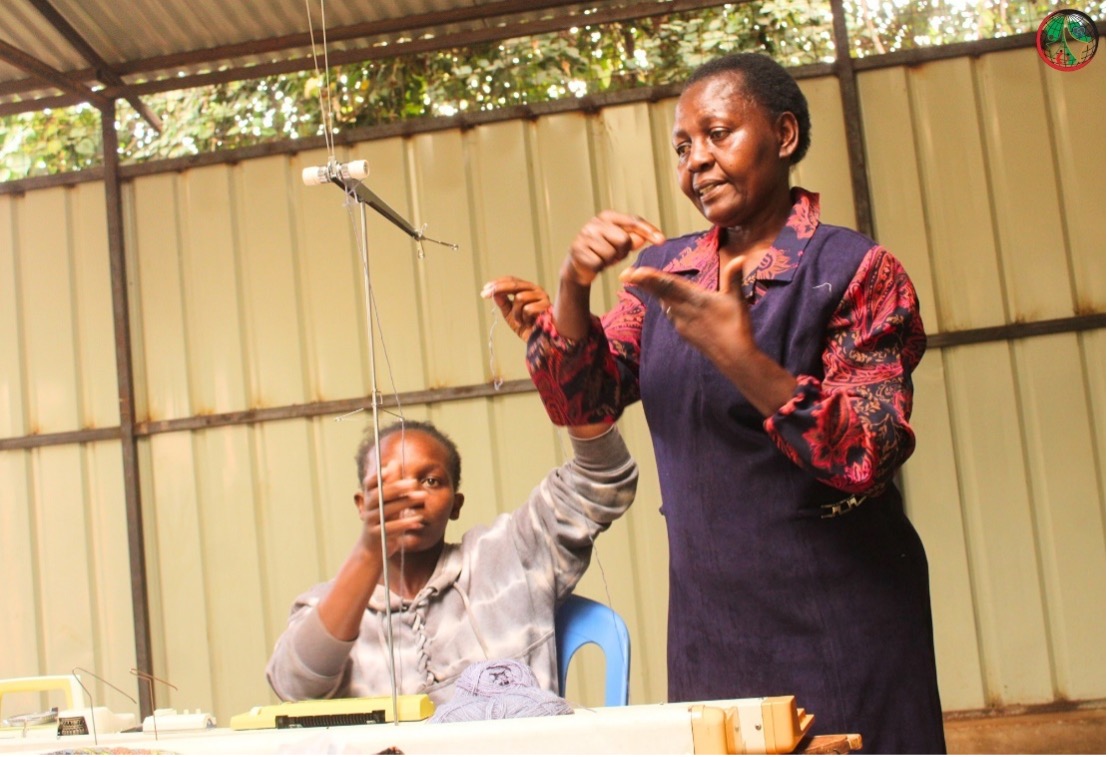
Because of her dedication, resilience and leadership qualities honed earlier through peer counselling group training, members elected RoseMary as the Chairperson of the ERCN Caregivers Self-Help Group. This new leadership role boosted her confidence and gave her a platform to inspire others. Under her stewardship, RoseMary immersed herself in learning and refining crocheting and knitting techniques, not just by hand, but also by exploring, and eventually mastering, the use of new knitting machines. She spent time learning side-by-side with other caregivers, sharing experiences and supporting each other’s development. Recognising her craftsmanship and commitment, the project appointed RoseMary as a trainer of trainers, enabling her to teach others how to knit sweaters, beanies and other garments using the knitting machine. She took on the role joyfully, driven both by a sense of giving back and by realising that she could earn a sustainable income by tutoring other caregivers.
‘Before the Empower Her Project, I felt discouraged and close to giving up, but through table banking, leadership training and the support of other caregivers, I regained hope, rebuilt my knitting business, and found my voice. Today, I am proud to be a leader and trainer, able to support my family and inspire other caregivers to believe that with the right support, we can rise, earn and lead together.’ - Rosemary Said, Empower Her project participant
Today, RoseMary beams with pride. She no longer sees herself as a victim of circumstance but as a leader, a mentor, a trainer and a source of hope for other caregivers. Her journey reflects the transformation that can happen when individuals are supported, given access to financial tools, skills training and community-based self-help structures.
The Empower Her project addresses not only poverty but also dignity, self-reliance and resilience. Caregivers like RoseMary are able to support their CWDs and their siblings, significantly improving their quality of life and long-term outcomes.